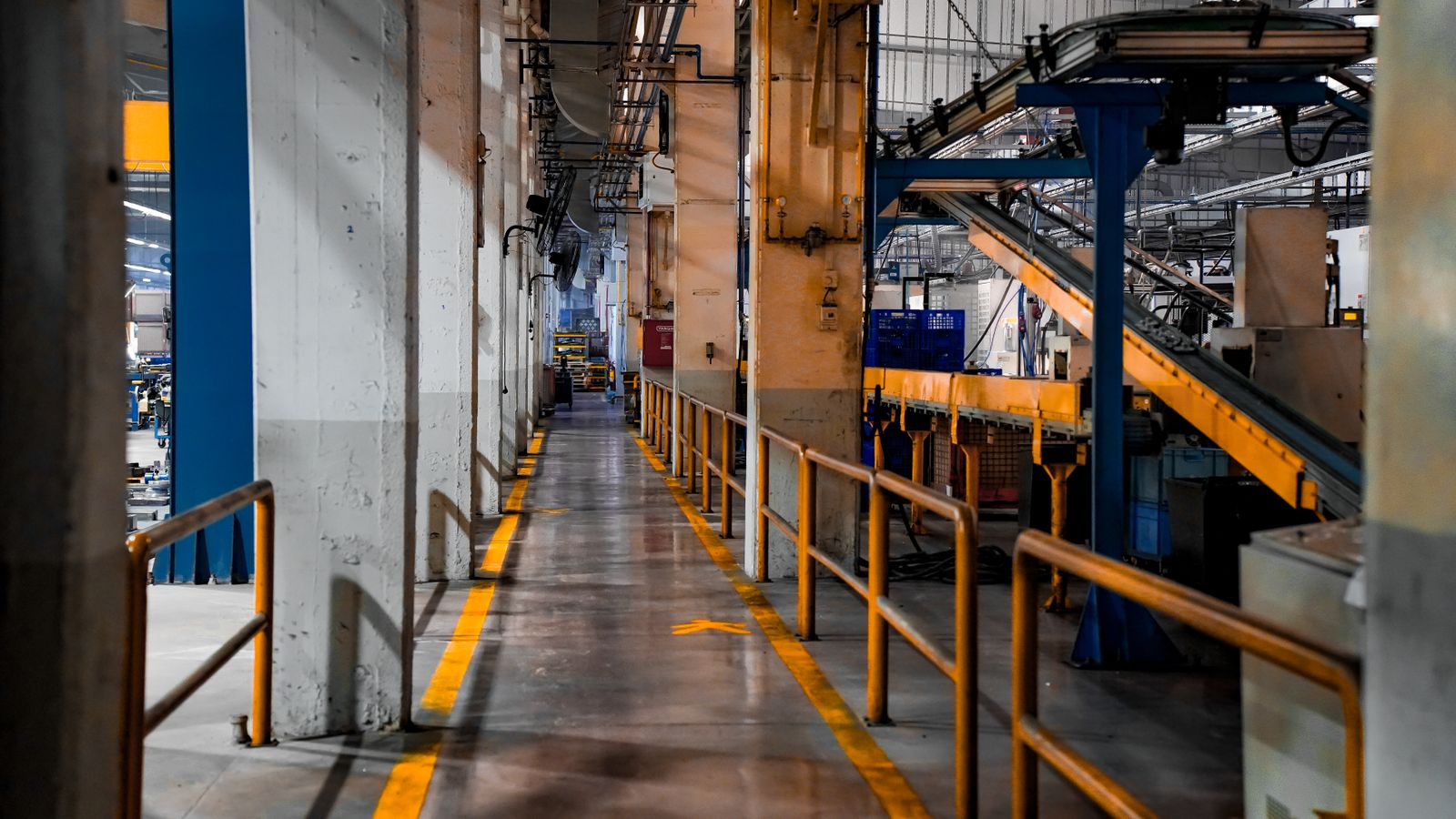
Four processes and the line that makes them hold
What happens to a part between the dock and the packing table, in the order it happens.
How a part moves through here
- 01
Receiving and count
Parts are counted in against your packing list and photographed if they arrive damaged or already finished. Disputes end at that photograph.
- 02
Strip and blast
Old finish comes off chemically or in the cabinet: steel grit for steel, aluminum oxide for aluminum, so the surface profile is right before anything wet touches it.
- 03
Five-stage pretreatment
Alkaline clean, rinse, iron phosphate, DI rinse, seal. Bath titrations are run twice a shift and logged, because this is the stage that decides adhesion.
- 04
Coat or plate
Electrostatic spray for powder, tank work for zinc, nickel and passivate. Masking goes on here, from the notes you gave us at quote time.
- 05
Cure and test
Cure to the powder manufacturer's schedule, typically ten minutes at 400 deg F part metal temperature, with the oven profile recorded per load.
- 06
Measure, pack, ship
Film thickness read on every load, coupons filed, parts packed the way you asked. The readings go on the packing list, not into a drawer.
Process specifications
The numbers we work to, and the test that proves each one. Ask for any of these on your job and it goes on the traveller.
| Powder coating | |
|---|---|
| Film thickness | 2.0 to 4.0 mil typical, measured per ASTM D7091 on every load and recorded on the packing list. |
| Pretreatment | Five-stage: alkaline clean, rinse, iron phosphate, DI rinse, seal, then dry-off at 300 deg F. |
| Cure | To the powder manufacturer's schedule, typically ten minutes at 400 deg F part metal temperature, profiled and logged. |
| Adhesion | Cross-hatch to ASTM D3359, 4B or better, checked on a coupon run alongside your parts. |
| Plating | |
| Zinc | Trivalent clear and yellow, 0.0003 in. minimum, RoHS compliant. Hydrogen embrittlement relief within four hours on request. |
| Electroless nickel | Mid-phosphorus at six to nine percent, 0.0002 to 0.0010 in., uniform in blind holes and on threads. |
| Passivation and conversion | |
| Passivation | ASTM A967 nitric and citric, verified by copper sulfate or high-humidity test. |
| Chem film | MIL-DTL-5541 Type II, Class 1A and Class 3 on aluminum, clear or gold, for paint base or conductivity. |
| Testing we can run with your job | |
| Salt spray | ASTM B117 neutral salt fog at 500 or 1,000 hours, run on coupons from your load and reported with photographs. |
| Hardness and gloss | Pencil hardness to ASTM D3363 and 60-degree gloss readings, on request or on a standing instruction. |
Every load carries a coupon and the readings stay on file for three years, so a question in 2029 still has an answer.
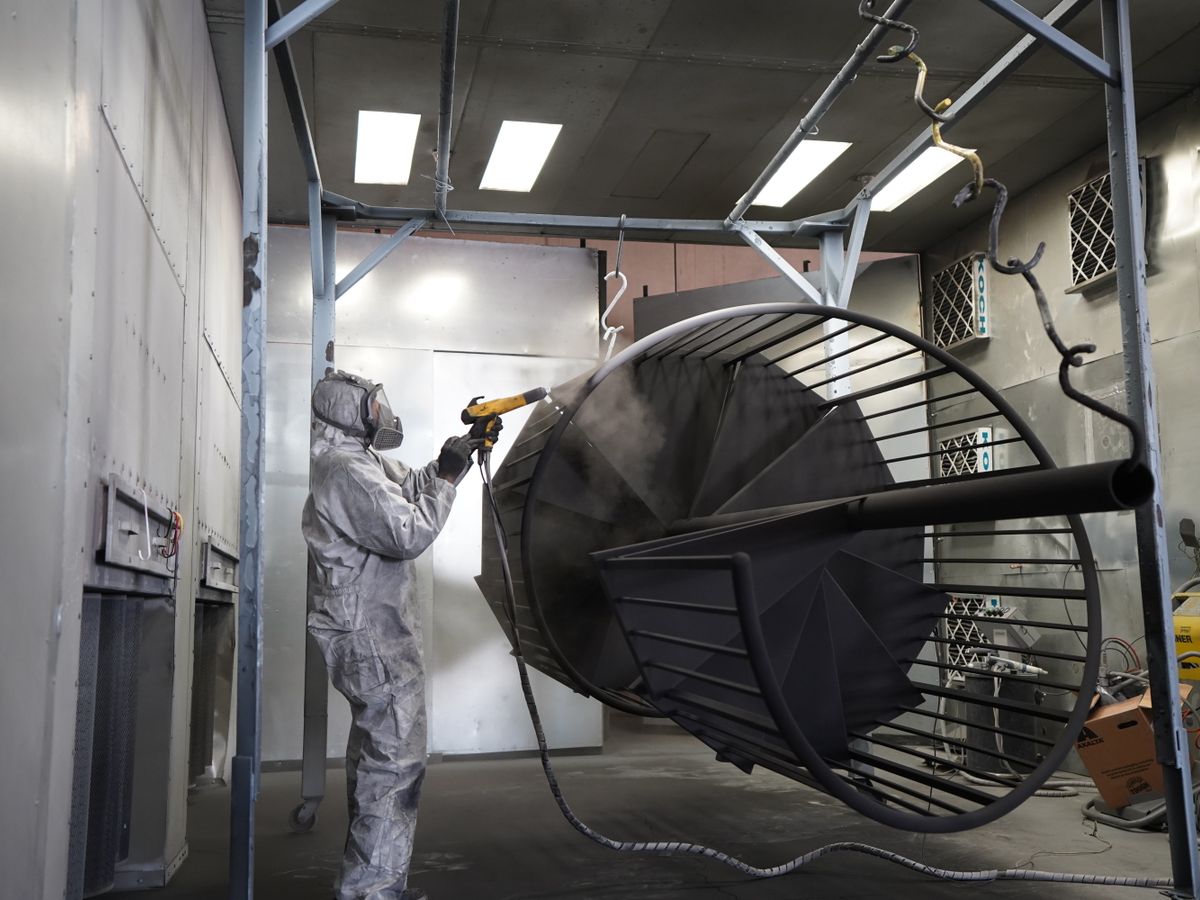
Pretreatment
The stage nobody sees is the one that decides adhesion
Almost no coating failure is a coating failure. It is oil that survived the wash, a phosphate bath that drifted, or a part that sat wet overnight before it went in the oven.
So the five-stage line is where our attention goes: titrations twice a shift, conductivity on the DI rinse, and a dry-off oven the parts actually pass through rather than a fan pointed at a rack. It is the least photogenic equipment in the building and the reason the finish is still on your part in five years.
Standards we work to
- ASTM B117 salt spray
- ASTM D3359 adhesion
- ASTM D7091 film thickness
- ASTM A967 passivation
- MIL-DTL-5541 Type II
- RoHS 3 compliant
- REACH SVHC declared
Take the numbers with you
- Color and gloss card (PDF)Every powder on the shelf, with RAL equivalents and 60-degree gloss values.
- Process specification sheet (PDF)Thicknesses, cure schedules and test methods for all four processes, on one page.
- Racking and masking guide (PDF)Where to put a hole so we can hang it, and how to call out a surface that must stay bare.
Send one part before you send five hundred.
We will run it, measure it, and send it back with the readings. Then you decide.